Shakespeare at the Movies: Much Ado About Nothing
Is there a version of Much Ado About Nothing to rival Kenneth Branagh’s tour-de-force?
Branagh’s notable turn as director-producer-adapter-star of 1993’s Much Ado About Nothing — opposite his then-wife, Emma Thompson — is the modern standard for enjoyably cinematic Shakespeare. But a quick search finds nearly 20 different versions on IMDB.com, although most are not accessible for streaming. Which versions are worth a watch? Which will suit student audiences? Does Branagh’s version have any viable challengers to its 30-year reign? In the post below, I’ll give you a quick overview of available versions, and my opinions on each, along with quick hits on related films you might be curious about.
I’ll continue to update this post as I’m able to watch new versions.
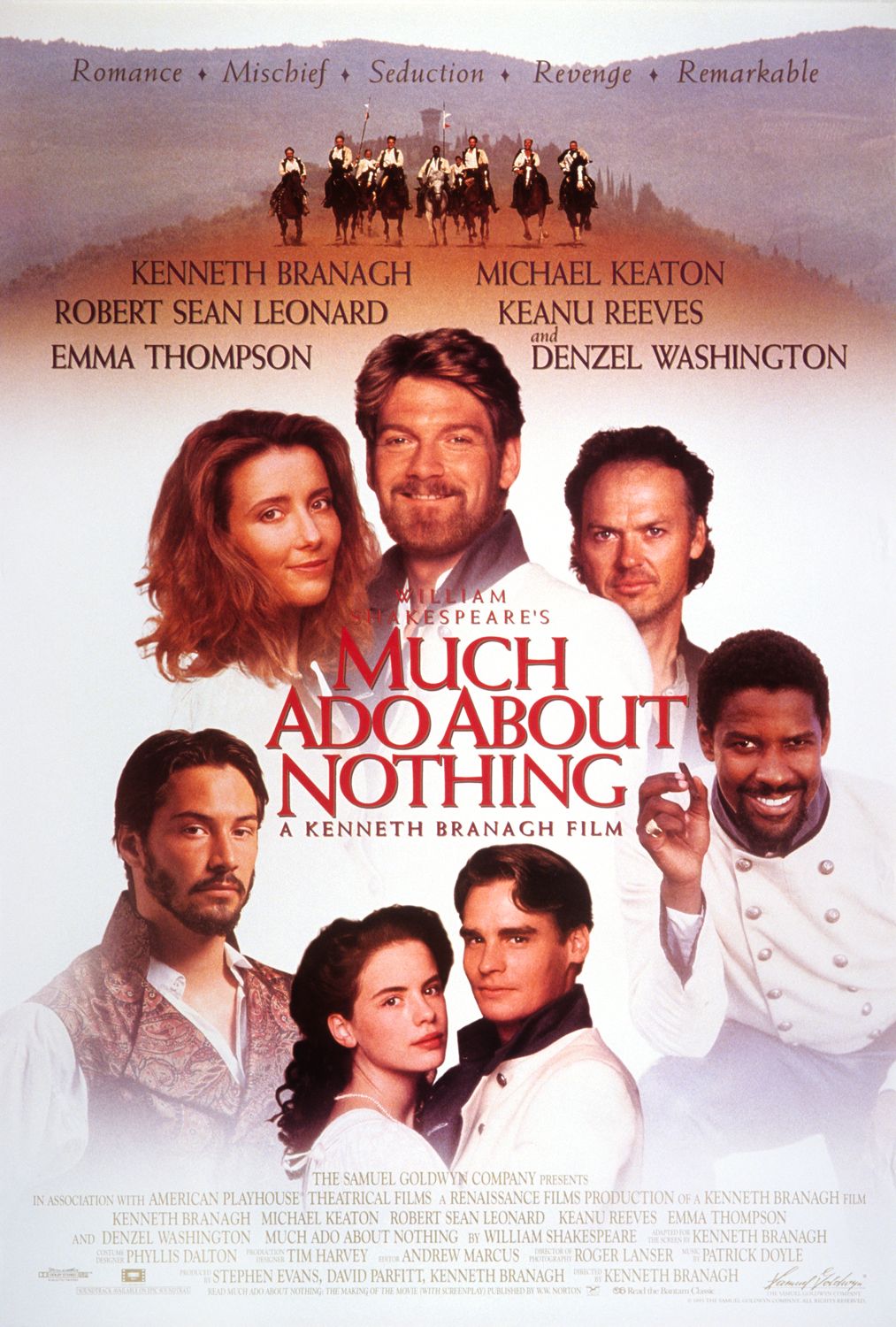
Much Ado About Nothing (1993) • Directed by Kenneth Branagh
Kenneth Branagh’s jack-of-all-trades helmsmanship shows all the mastery the old adage disallows. His direction was savvy, his adaptive pen was nimble, and his turn as the bachelor Benedick was winsome. Supported by Emma Thompson, Denzel Washington, Keanu Reeves, Kate Beckinsale, Robert Sean Leonard, Michael Keaton, and a stable of British theatre greats, this Much Ado is the gold standard by which all other versions must be measured.
Much Ado About Nothing (1993)
Rated
PG-13
Runtime
1hr 51mins
Starring
Kenneth Branagh, Emma Thompson, Robert Sean Leonard, Kate Beckinsale, Denzel Washington, Keanu Reeves, Michael Keaton
These ratings are subjective opinion. Use with caution.
It’s easy to get rhapsodic about Kenneth Branagh’s Much Ado About Nothing. This film manages to be both respectful of the source material, and innovative in its choices. The setting, a sprawling villa in the Tuscan countryside, nestles Shakespeare’s idealized Italy into the scenic vistas of the real thing. The cinematography, the costuming, the music — every aspect of the enterprise seems to humming along just as it should. Film is a uniquely collaborative art, and films like this Much Ado show that when everyone does their jobs exceptionally well, the results can be exceptional.
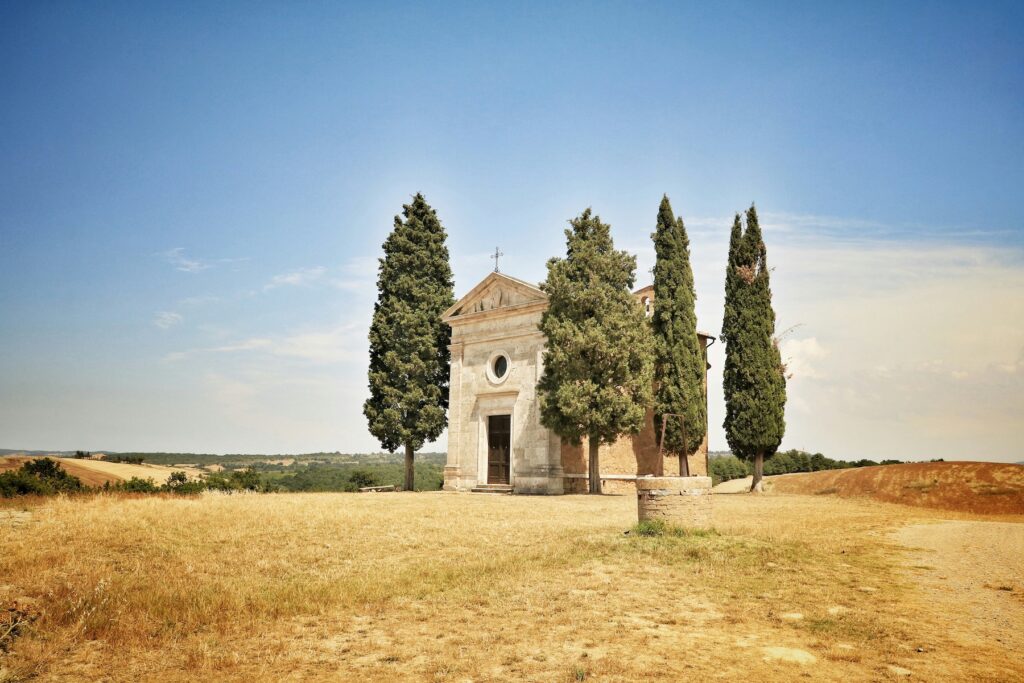
Branagh’s capable direction certainly steered this film to its accolades. The real Messina is a coastal city right where the Italian peninsula meets the island of Sicily; instead, Branagh chose the edenic, rural Tuscany as the right backdrop for this romantic escapade. The brilliant sun, vivid greenery, and floral colors of the setting accentuate subtle shades-of-white costumes, keeping the actors in the foreground. All seems warmth and light in Leonato’s paradise, until the dark presence of Don John and his coldly-scheming henchmen slither into Eden to make trouble.
Keanu Reeves as Don John is one of the many surprises in Branagh’s casting. Until Much Ado’s 1993 debut, moviegoers knew Reeves largely as the latter half of the titular slacker-duo in Bill and Ted’s Excellent Adventure, and Point Break’s FBI-agent-turned-surfer, Johnny Utah. Reeves portrays an unapologetically-sinister antagonist who strikes impotently at his brother by ruining the wedding of his brother’s favorite, and does so with a surly languidness that suits the mood of this light comedy, giving John depth without encumbering the plot with superfluous backstory. While his appearance in Shakespeare probably read as a gimmick at the time, Reeves proves himself actor enough to carry the load of a modern villain who is at once bored, malicious, and unrepentant.
Another surprise casting was Michael Keaton as Dogberry, returning to his comedic roots after headlining Tim Burton’s dark 1990s vision of Batman. Keaton’s interpretation of Dogberry, sporting greasy hair with an equally greasy grin to complement his obsequiousness, steals every scene in which he appears. The actor’s fluency with physical comedy is stretched to such an extent, and delivered with such dedication, one wonders how his co-stars maintained a civil countenance.
The real stars, of course, are Branagh and his then-wife, Emma Thompson, in the comedic leads of Benedick and Beatrice. Shakespeare’s lively verbal fencing match is played with the exact blend of sunburnt gaiety and pricked vanities to convey that “the lady doth protest too much” and his lordship is not quite the cool-and-confirmed bachelor he leads the world to believe. Thompson’s Beatrice is not a shrew, and Branagh’s Benedick is not a cad: they are lively and amiable with everyone except each other. When fate — in the form of their dearest friends and relatives — intervenes to entrap them into a “mountain of affection, the one with the other,” one only wonders what took so long.
Shakespeare’s subtext sermon on wooing and marriage plays out to a tee, as Claudio and Hero’s shallow, at-first-sight affinity is eclipsed in every way by Beatrice and Benedick’s marrow-deep compatibility. Robert Sean Leonard is a solid Claudio, and likable enough to make us overlook the Count’s less-than-gallant behavior toward Kate Beckinsale’s naive young Hero. The supporting leads are convincing and attractive, which is to say they are all the Bard could hope for in his second string.
Denzel Washington’s appearance as Don Pedro, Prince of Aragon, is a pleasant idyll. Washington’s gravitas suits the role, though it leaves him little to do but play Cupid and preside over the affairs of others. The supporting cast comes with established British theatre credentials in abundance: Richard Briers as Leonato, Brian Blessed at Antonio, Phyllida Law (Emma Thompson’s mother) as Ursula, and Imelda Staunton (now recognizable as Harry Potter antagonist, Dolores Umbridge) as Margaret.
Content Warnings
The only drawback to this version is its deserved PG-13 rating, due to a couple of scenes that can be skipped easily. First is a scene at the beginning of the film when Don Pedro and his men arrive at Leonato’s villa after a battle, sending Leontato’s household into a furor of preparation — which includes scenes of bathing by men and women, filmed separately but smash-cut together. The actual nudity here lasts about 30 seconds in total (from about 7:43 to about 8:14 by my time stamp), and there’s so much activity and movement, both by the camera and the actors, it would be easy to miss most of it.
There is another scene (only referred to in the dialogue of the original play but never shown), in which Don John brings Claudio and Don Pedro under Hero’s window, where they can plainly see Borachio and Margaret — with her back turned, appearing to be Hero herself — eagerly consummating their affair. It will be quite clear to students of almost any age what they’re up to, and there is plenty of motion and moaning to put aside any doubt. Skipping the whole scene (about 57:34 to about 58:24) costs a little dialogue between Don John and Claudio, so use your discretion either way.
Perhaps the ultimate compliment to Branagh’s Much Ado is the dearth of other versions that have become hits since its premiere. If this respectful, accessible, joyous romp discouraged Hollywood from butchering another one of Shakespeare’s most well-known and beloved plays for over thirty years… well, I can’t say that I’m sorry.
The Pros
The Cons
My Verdict
This pitch-perfect film is the pinnacle of what Shakespearean comedy has to offer an audience: brilliant performances, sumptuous visuals, and joie de vivre aplenty.
This version is best for…
Much Ado About Nothing (2012) • Directed by Joss Whedon
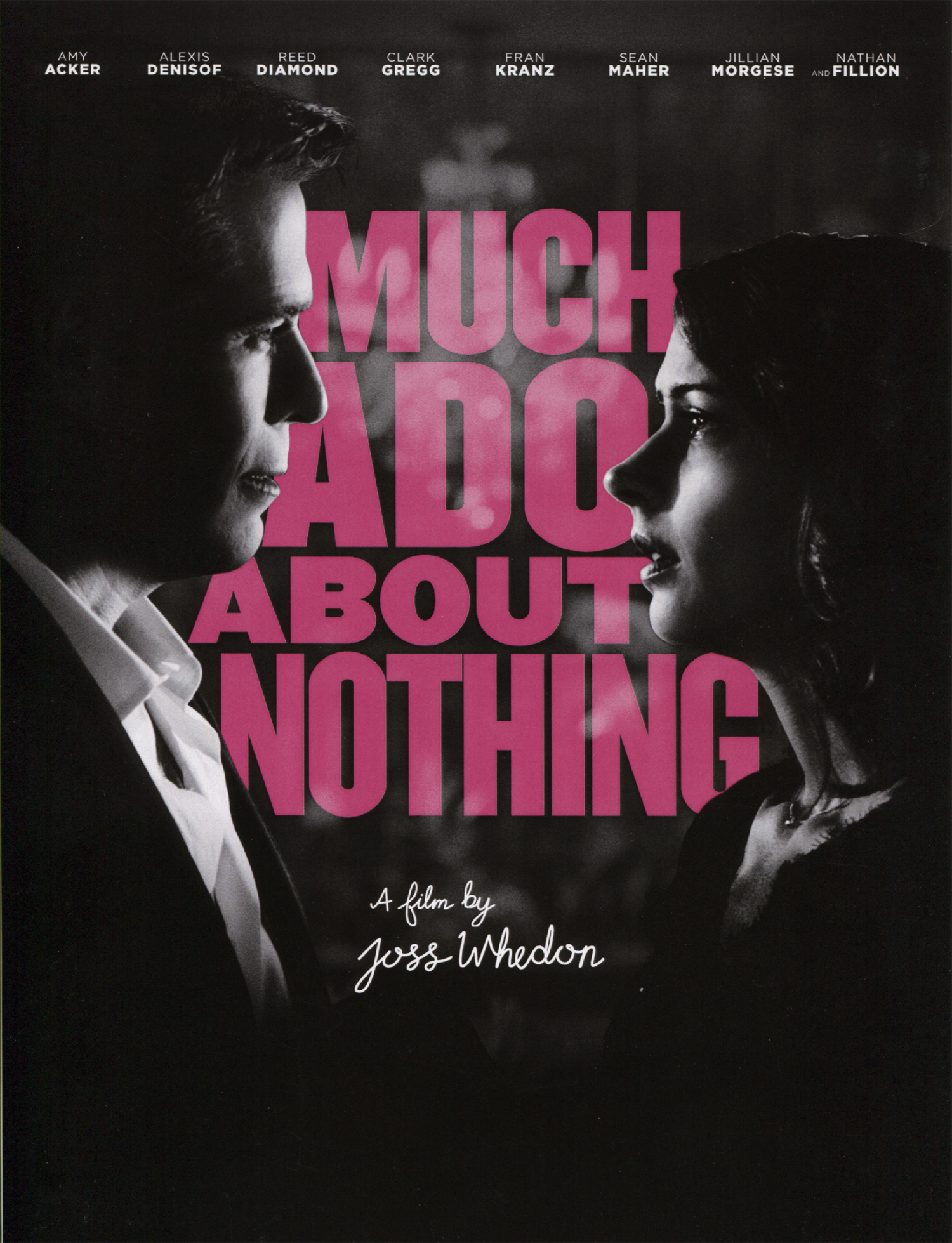
Directed by Joss Whedon, (Avengers: Age of Ultron, The Avengers, Buffy the Vampire Slayer TV series), who sets the action in a modern-day villa — filmed in black-and-white. Hailed by critics as “nimble, spirited, sexy” and “as natural as texting,” Whedon’s version is long on contemporary sensibilities and short on textual fluency.
Much Ado About Nothing (2012)
Rated
PG-13
Runtime
1hr 49mins
Starring
Alexis Denisof, Amy Acker, Fran Kranz, Jillian Morgese, Nathan Fillion, Reed Diamond
These ratings are subjective opinion. Use with caution.
It’s entirely possible that my grudge against Joss Whedon for the Justice League mess has skewed my perspective on his 2012 version of Much Ado About Nothing. But I don’t think so. It’s just not a good movie.
Whedon’s take on Much Ado translates the story, notably filmed in black-and-white, into what seems to be a well-heeled California villa in contemporary times. Had the setting embodied the sweeping Tuscan vistas of Branagh’s version, or even the lived-in California elegance captured so well by Nancy Meyers in The Holiday and It’s Complicated, filming in black-and-white would have been inexcusable. As it is, the palate probably helped create unity that isn’t otherwise evident. The house isn’t palatial enough to warrant the moniker “mansion” and the incongruity of the rooms used for filming leaves the viewer with the uncomfortable sensation of an AirBNB with an intrusive host — the kind who charges you extra for using the pool table or showering too long. Benedick and Claudio, dressed in severe black business suits, unpacking their suitcases in what is clearly a little girls’ bedroom — complete with twin beds and shelves of stuffed toys — might be a loose nod to Pulp Fiction, but it seems predatory and weird. Whedon’s tight camera angles do succeed in putting us right in the midst of the action, but it creates a sense of claustrophobia rather than intimacy. Every shot seems crowded with too many objects, too many people, too little space.
The performances are all over the map. Amy Acker as Beatrice is sharp and energetic, with a very expressive face. Nathan Fillion had an interesting and watchable take on Dogberry. Jillian Morgese is pretty and inoffensive as Hero. Most everyone else is fine, or forgettable. I did not care for Alexis Denisof’s portrayal of Benedick — whether because his performance, or because the character was transformed into a cad (see below), I can’t decide. Accurate rendering of the verse could have been a saving grace to the cast, but Whedon seems to have chucked it for a “conversational” tone that leaves the dialogue — however faithful it may be — clunky and dry. Without the structure of the verse, the actors are left to communicate mostly in sidelong glances, and limp, uneven lines. It’s not entertaining, challenging, or even particularly interesting.
Content Warnings
In addition to its artistic flaws, this version of Much Ado is totally inappropriate for students. The movie opens with Beatrice and Benedick in bed together, plainly in the aftermath of a sexual encounter. Benedick sneaks out as Beatrice sleeps. Not a great setup for your erstwhile ”hero.” Furthermore, in a play that turns on the false allegations of unchastity against one of its heroines, framing the other as a dyed-in-the-wool “approvèd wanton” completely undermines the climax of the play. If no one cares that Beatrice slept around, why is Claudio so unhinged by similar allegations against Hero? This modernized-when-convenient-but-ignored-when-not context makes no sense whatsoever.
The sexual content descends further — figuratively and literally — from this promiscuous opening. Borachio’s scene “courting” Margaret leaves little to the imagination except actual nudity. The character of Conrade, Don John’s henchman, is recast as a female lover. We are given ample demonstration of their “situationship”: from rolling around on a bed, to a very awkward scene that, well… As words fail to express the indecent decently, the reader shall pardon my intentional absence of clarity here. Shakespeare is bawdy, but these scenes are flat-out trashy.
This film might have been a notable accomplishment from a student filmmaker on a shoestring budget, but as a studio feature from an established director, it seems underwhelming and contrived. Those who don’t generally like Shakespeare may appreciate Whedon’s “down to earth,” modernization, but it feels like the most likable elements of a very likable play were jettisoned to make room for a “sexier,” “edgier” version. In my opinion, the effort falls flat.
The Pros
The Cons
My Verdict
This drab, smarmy, forgettable, soap-opera version is only for adults — especially those who hate Shakespeare and want everyone else to hate it, too.
This version is best for…
Notable Spin-offs and Parallel Versions
Shakespeare’s Much Ado About Nothing has generated plenty of interpretations but not many spin-off films — in fact, I could only find two. But there are lots of male-female-rivalry-leads-to-love films, so I added a couple of tangentially-related favorites of mine.
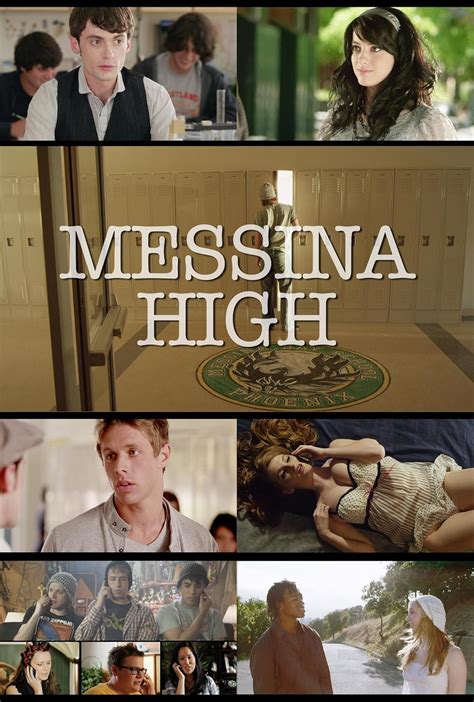
Messina High (2015)
Messina High is reputed to be a modern language adaptation of Much Ado About Nothing that “transports the story and characters from the play into a posh suburban high school where gossip and drama rule the day.” I say “reputed to be” because thus unrated film doesn’t appear to be streaming anywhere on the major services, so I haven’t been able to watch it.
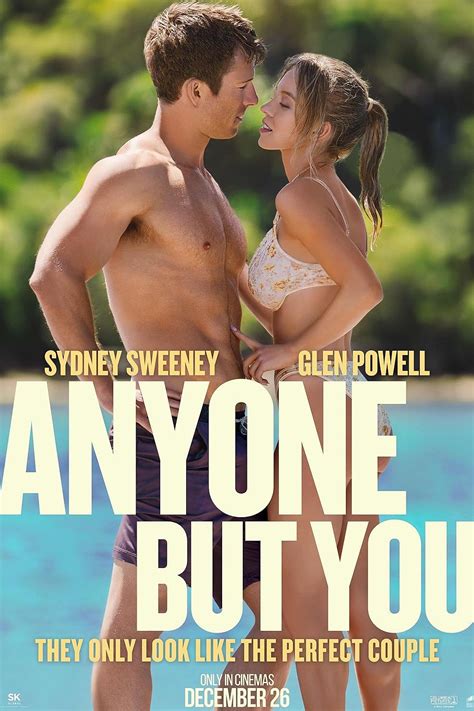
Anyone But You (2023)
It seems Hollywood will never stop trying to answer the question no one is asking: What if Beatrice and Benedick hate each other because their hook-up went badly? This latest R-rated attempt pairs Sydney Sweeney with Glen Powell for a modernized take — presumably on the chance that the “It” status of both leads would translate into box office gold. I lost any interest in watching after reading this film’s synopsis and skipped it with prejudice. Judging from the reviews, that was a good decision. Defintely NOT SAFE FOR KIDS.
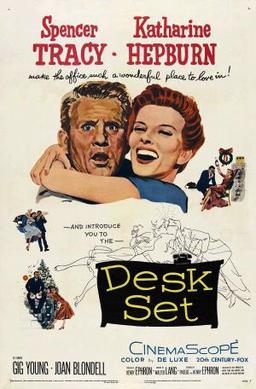
Desk Set (1957)
Spencer Tracy and Katherine Hepburn come together at their best in this witty comedy. Hepburn stars as a brilliant documentalist leading a network TV research department, facing off against Tracy, an idiosyncratic engineer installing the mainframe computer that seems destined to replace her. In addition to featuring Tracy and Hepburn’s signature verbal repartee, this film is an entertaining snapshot of bygone corporate America gearing up for the tech revolution.
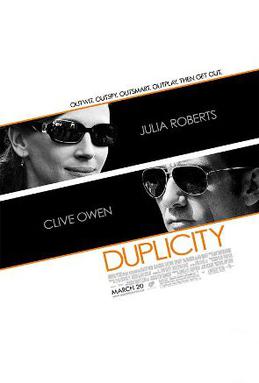
Duplicity (2009)
He’s MI6. She’s CIA. Nobody trusts anybody. Julia Roberts and Clive Owen star as a pair of former spies trying to juggle a long-distance romance while running an elaborate con job with millions of dollars at stake. The result is a sharp, funny caper film that will keep you guessing at every turn. Roberts and Owen have all the wit and chemistry of Beatrice and Benedick, while the supporting cast does their best to steal the show.
Hopefully you find these reviews helpful! As always, these are my own subjective opinions, but I’d love to hear which versions you like — or dislike. Let me know your opinions in the comments!